In the midst of the global digital transformation wave, edge computing has become a critical bridge connecting the cloud to the physical world. It shifts data processing from remote cloud servers to the device side, enabling low-latency, high-privacy real-time responses. However, edge environments often face challenges such as resource constraints, power sensitivity, and diverse task requirements. In this context, ARM architecture’s multi-core heterogeneous computing stands out by integrating various processor cores (e.g., high-performance Cortex-A cores, low-power Cortex-M cores, GPUs, and specialized accelerators) into a single system-on-chip (SoC), injecting robust power into edge devices. This architecture not only optimizes computational efficiency but also brings revolutionary changes to fields like the Internet of Things (IoT), artificial intelligence (AI), and industrial automation.
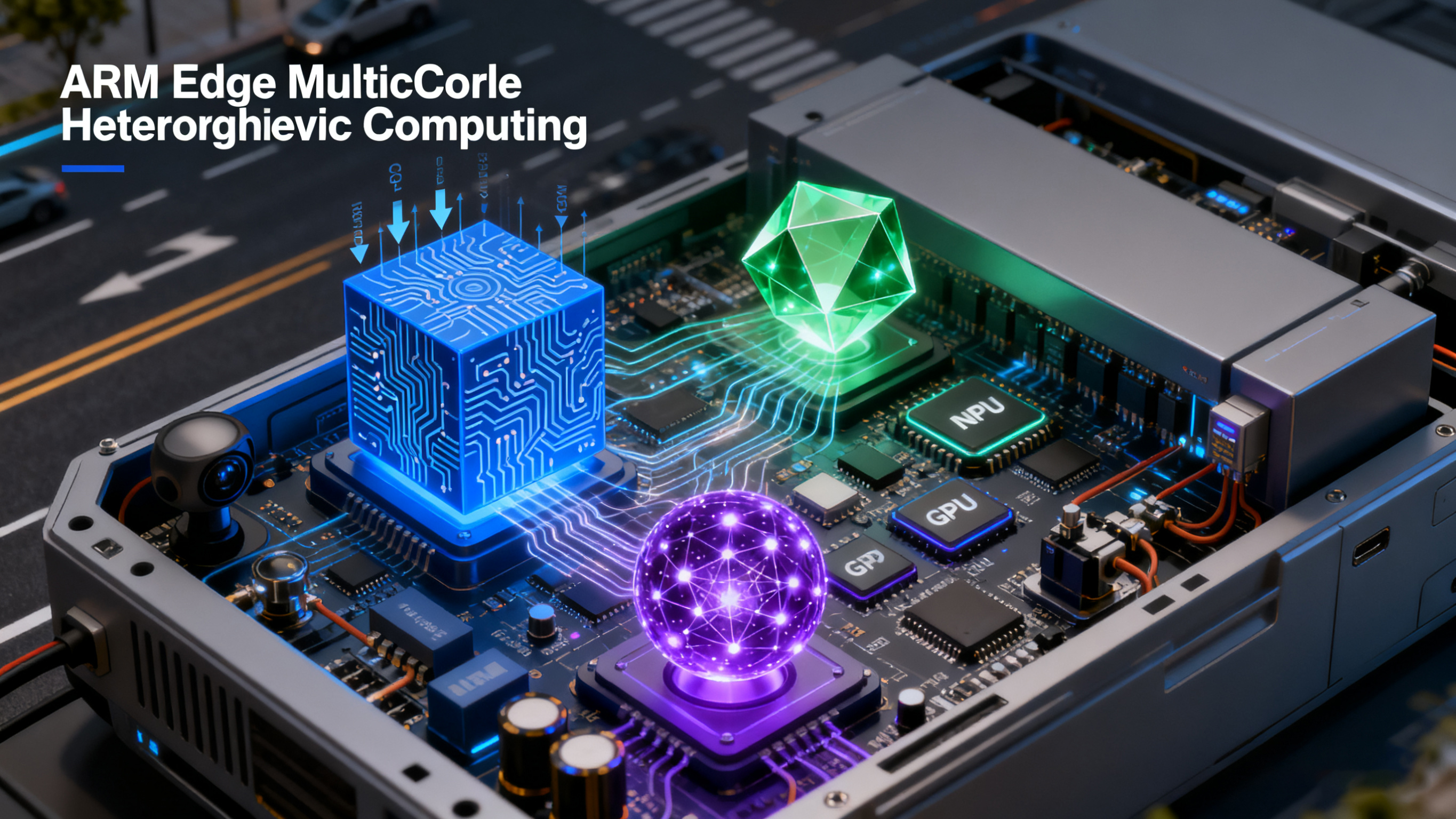
The Essence and Evolution of Heterogeneous Architecture
The core of multi-core heterogeneous computing lies in the word “heterogeneous.” Unlike traditional homogeneous multi-core systems (e.g., all identical CPU cores), it integrates different types of processors with varying power profiles into a single SoC. As a leader in mobile and embedded systems, ARM’s big.LITTLE technology is a prime example. This approach dynamically combines high-performance cores (e.g., Cortex-A series) with power-efficient cores (e.g., Cortex-M series), intelligently switching based on task load to achieve “ferocious performance when needed and whisper-quiet efficiency when idle.”
In edge computing scenarios, this architecture has evolved further, incorporating GPUs for graphics rendering and parallel computing, NPUs (neural processing units) for AI inference, and even FPGAs for reprogrammable acceleration. For instance, ARM’s Neoverse platform supports seamless scaling from cloud to edge, ensuring efficient collaboration under a unified memory view. This design stems from the diverse needs of edge devices: real-time control demands low latency, data analytics requires high throughput, and security monitoring needs a balance of power and reliability.
Core Advantages of Multi-Core Heterogeneous Computing
ARM edge multi-core heterogeneous computing is not merely a hardware stack but a system-level optimization tailored to edge challenges. Its advantages are multidimensional and significant:
First, performance optimization and task allocation. The heterogeneous system allows computationally intensive tasks (e.g., AI image recognition) to be assigned to GPUs or NPUs, while real-time control tasks (e.g., sensor data acquisition) are handled by low-power M4 cores. This parallel collaboration can reduce task completion times by several folds, especially in edge AI applications, supporting 8K video processing or multimodal data fusion.
Second, reduced power consumption and enhanced energy efficiency. Edge devices are often battery-powered or energy-constrained. The big.LITTLE configuration achieves dynamic load balancing, avoiding full-core high-frequency operation and saving up to 30% of energy. Additionally, shared virtual memory mechanisms reduce data copy overhead, further boosting overall efficiency. This is critical for mobile robots or smart wearables, ensuring prolonged autonomous operation.
Third, cost-effectiveness and system integration. ARM’s open-source nature and modular design lower development barriers, while heterogeneous SoCs reduce the need for external chips, enabling compact packaging. Compared to x86 platforms, ARM heterogeneous systems are more cost-competitive and support scaling from low-end IoT to high-end automotive electronics.
Fourth, enhanced reliability and security. Multi-core redundancy provides fault tolerance, and dedicated interconnects (e.g., Cortex-M4F’s secure channels) protect against side-channel attacks. In edge scenarios, this translates to higher quality of service (QoS), such as zero-downtime responses in industrial predictive maintenance.
Finally, scalability and ecosystem support. ARM’s heterogeneous framework is compatible with multiple operating systems (e.g., Linux + RTOS) and seamlessly integrates with AI toolchains like TensorFlow Lite. Developers can customize core combinations to accelerate prototyping to mass production.
Application Scenarios: From Smart Factories to Smart Cities
ARM edge multi-core heterogeneous computing has penetrated various vertical domains. In Industry 4.0, it drives predictive maintenance systems: A53 cores handle big data analytics, while M4 cores monitor equipment vibrations, enabling millisecond-level fault warnings. In intelligent transportation, heterogeneous SoCs power ADAS (Advanced Driver Assistance Systems), with GPUs accelerating object detection and CPUs managing path planning, reducing accident risks.
In consumer electronics, such as smart home cameras, the architecture enables local face recognition, enhancing privacy and reducing cloud bandwidth dependency. Medical edge devices leverage its low-power characteristics for wearable heart rate monitoring and real-time alerts. Looking ahead, with the integration of 5G and 6G, ARM heterogeneous computing will further empower edge rendering for the metaverse, driving immersive experiences.
Case Study: ARM Edge Gateway BL350 Based on TI AM6254’s Heterogeneous CPU in Action
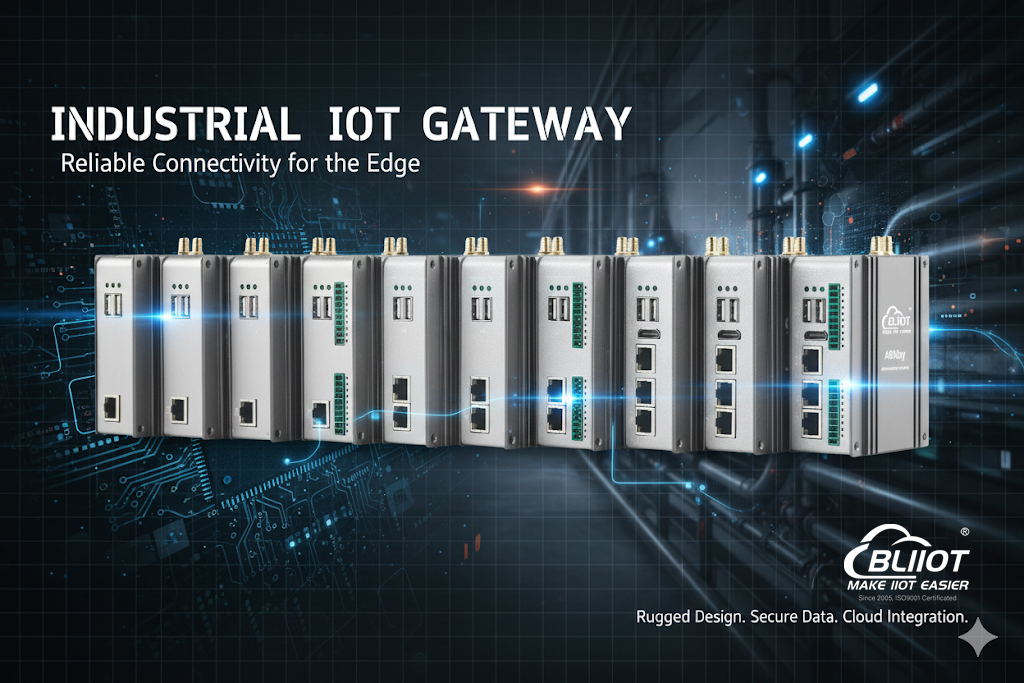
As a flagship of Texas Instruments’ (TI) Sitara series, the AM6254 processor perfectly exemplifies the practical value of ARM edge multi-core heterogeneous computing. This SoC integrates 4x 64-bit Arm Cortex-A53 application processor cores, clocked at up to 1.4 GHz, with a 512KB L2 shared cache, designed for high-performance edge computing. It also features a single Cortex-M4F real-time processor, running at 400 MHz, with dedicated device-level interconnects for secure isolation and low-latency responses.
The AM6254’s heterogeneous design shines in edge applications: the A53 cluster handles complex tasks like computer vision object detection and facial recognition, supporting dual-display output and 3D GPU graphics acceleration (available in AM625 variants). The M4F core manages real-time control, such as industrial sensor fusion or motor drives, achieving microsecond-level responses. Overall power consumption remains efficient, with integrated LPDDR4 memory interfaces and rich peripherals (including PCIe, USB, and Ethernet), making it ideal for space-constrained systems.
In real-world deployments, the AM6254 powers edge gateways in smart factories: A53 cores analyze vast production data, while the M4F monitors equipment status, improving system reliability and efficiency by over 20%. This not only reduces operational costs but also injects vitality into the AIoT ecosystem. TI’s AM6254 demonstrates that ARM heterogeneous architecture is transitioning from concept to mainstream, driving edge computing toward a smarter, more sustainable future.
In conclusion, ARM edge multi-core heterogeneous computing is not just a technological innovation but an engine for industry empowerment. As chip manufacturing advances, it will further blur the boundaries between cloud and edge, ushering in an era of pervasive intelligence.


