What is the EDGE Layer?
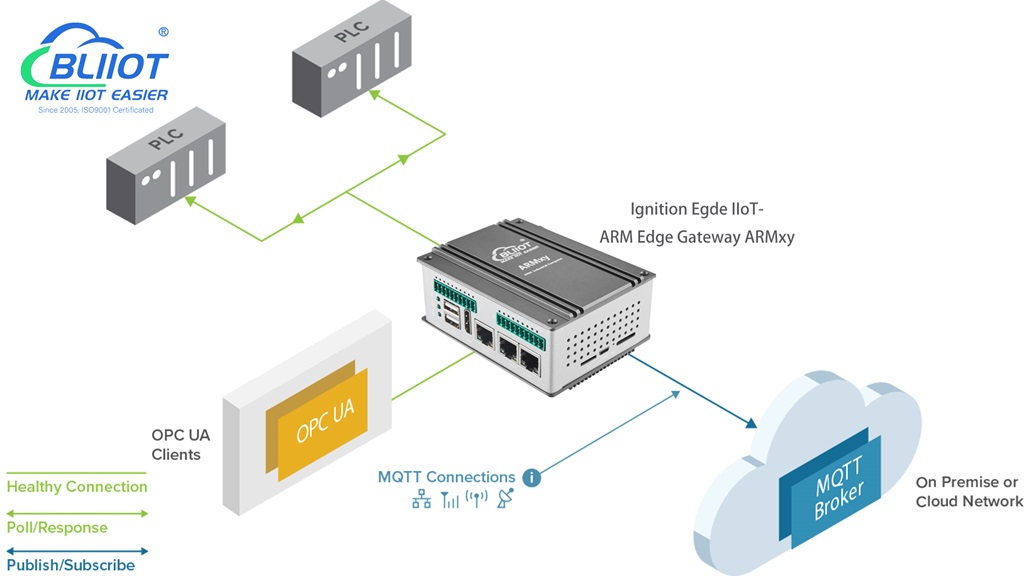
The EDGE layer, commonly referred to as edge computing, is a critical component in industrial automation. It involves processing data close to its source, such as machines, sensors, or controllers, rather than relying solely on centralized systems. The EDGE layer acts as an intermediary between the L1 layer (comprising PLCs, HMIs, and SCADA systems) and the L3 layer (MES and IIoT applications). By utilizing various protocol gateways, it collects data from the L1 layer and makes it accessible to the L3 layer in a streamlined and efficient manner.
Why is the EDGE Layer Important?
In traditional automation systems, all data was sent directly to centralized servers, leading to network congestion, increased system load, and concerns over data privacy. The EDGE layer addresses these challenges by offering several key benefits:
-
Real-Time Processing: By processing data locally, the EDGE layer enables instant responses, critical for time-sensitive industrial operations.
-
Optimized Network Usage: Only relevant or filtered data is transmitted to the cloud or central servers, reducing bandwidth consumption.
-
Offline Functionality: Local processing ensures that systems remain operational even during loss of cloud connectivity.
-
Enhanced Security: Sensitive data can be processed locally, minimizing the risk of exposure during transmission.
ARMxy Industrial PCs (IPCs) are rugged, high-performance computing devices designed to operate in harsh industrial environments. They serve as the hardware backbone for the EDGE layer, hosting edge computing applications and facilitating data processing. The integration of ARMxy IPCs with the EDGE layer amplifies its benefits in the following ways:
-
Robust Processing Power: ARMxy IPCs provide the computational capability needed to handle complex data processing tasks at the edge, such as real-time analytics and machine learning inference.
-
Reliability in Harsh Environments: Designed to withstand extreme temperatures, vibrations, and dust, ARMxy IPCs ensure uninterrupted operation in industrial settings, enhancing the reliability of the EDGE layer.
-
Flexible Connectivity: ARMxy IPCs support multiple communication protocols (e.g., OPC UA, Modbus, MQTT), enabling seamless integration with diverse industrial devices and systems.
-
Scalability: ARMxy IPCs allow the EDGE layer to scale efficiently, supporting the addition of new devices or applications without compromising performance.
-
Local Decision-Making: With ARMxy IPCs, the EDGE layer can execute advanced control algorithms locally, reducing latency and improving system responsiveness.
Applications in Industrial Automation
The EDGE layer, powered by IPCs, enhances industrial processes through the following applications:
-
Data Integration: It consolidates data from diverse sources and pushes it to centralized servers or the cloud using a single protocol, making it readily available for MES and IIoT applications.
-
Predictive Maintenance: By analyzing parameters such as vibration and temperature, the EDGE layer can predict equipment failures before they occur, reducing downtime and maintenance costs.
-
Energy Optimization: In the energy sector, real-time monitoring and adjustment of energy consumption help optimize costs and minimize waste.
Industrial EDGE Platforms
Several SCADA software solutions provide robust EDGE platforms to support industrial automation. These platforms, often deployed on IPCs, facilitate seamless data processing and integration at the edge.
Communication and Protocol Gateways
The EDGE layer relies on communication and protocol gateways, often hosted on IPCs, to bridge the gap between different systems and protocols. Notable solutions include:
-
Kepware (By PTC): A widely used platform for industrial connectivity.
-
Matrikon: Offers robust data connectivity solutions for industrial environments.
-
Node-RED: A flexible, open-source tool for wiring together hardware devices, APIs, and online services.
-
Ignition Edge (By Inductive Automation): Provides edge computing capabilities with a focus on scalability and efficiency.
Conclusion
The EDGE layer, augmented by Industrial PCs, is transforming industrial automation by enabling localized data processing, improving operational efficiency, and enhancing system resilience. IPCs provide the necessary computational power, reliability, and connectivity to maximize the benefits of edge computing. By leveraging EDGE platforms and protocol gateways, industries can achieve real-time insights, predictive maintenance, and optimized resource usage, paving the way for smarter and more secure automation systems.


