Many people new to Linux are often confused by one question: How many versions of Linux are there? Why do some mention Ubuntu, CentOS, Debian, RedHat, openSUSE, Arch, or Gentoo? It feels like everyone is talking about something different. Don’t worry—we’ll clarify this today.
First Things First: Linux Has Only One Kernel
Strictly speaking, Linux has just one “kernel,” the core software written by Linus Torvalds in 1991. This kernel has been continuously updated and is now at version 6.x, supporting countless servers, smartphones, and embedded devices worldwide. So, the Linux kernel is singular and unique.
Why Are There So Many “Versions”?

What people commonly call “Linux versions” are actually Linux distributions (distros). These are systems built on the same Linux kernel but combined with different software package managers, desktop environments, and toolchains to form distinct “system collections.”
Think of it this way:
- The kernel is like an engine—one core design, unchanging in principle.
- Distributions are like car brands, such as BMW, Mercedes, or Volkswagen—each builds a unique car, but all rely on the engine.
How Many Linux Distributions Are There?
The number might surprise you. According to DistroWatch, there are over 300 active Linux distributions, with a total exceeding 1,000! Common ones include:
- Debian Family: Debian, Ubuntu, Linux Mint
- Red Hat Family: RHEL, CentOS, Fedora, Rocky Linux, AlmaLinux
- Independent Distros: Arch Linux, Gentoo, Slackware, openSUSE
- Security-Focused: Kali Linux, Parrot OS
- Embedded Systems: Yocto, OpenWrt
There’s a Linux distribution tailored for nearly every industry imaginable.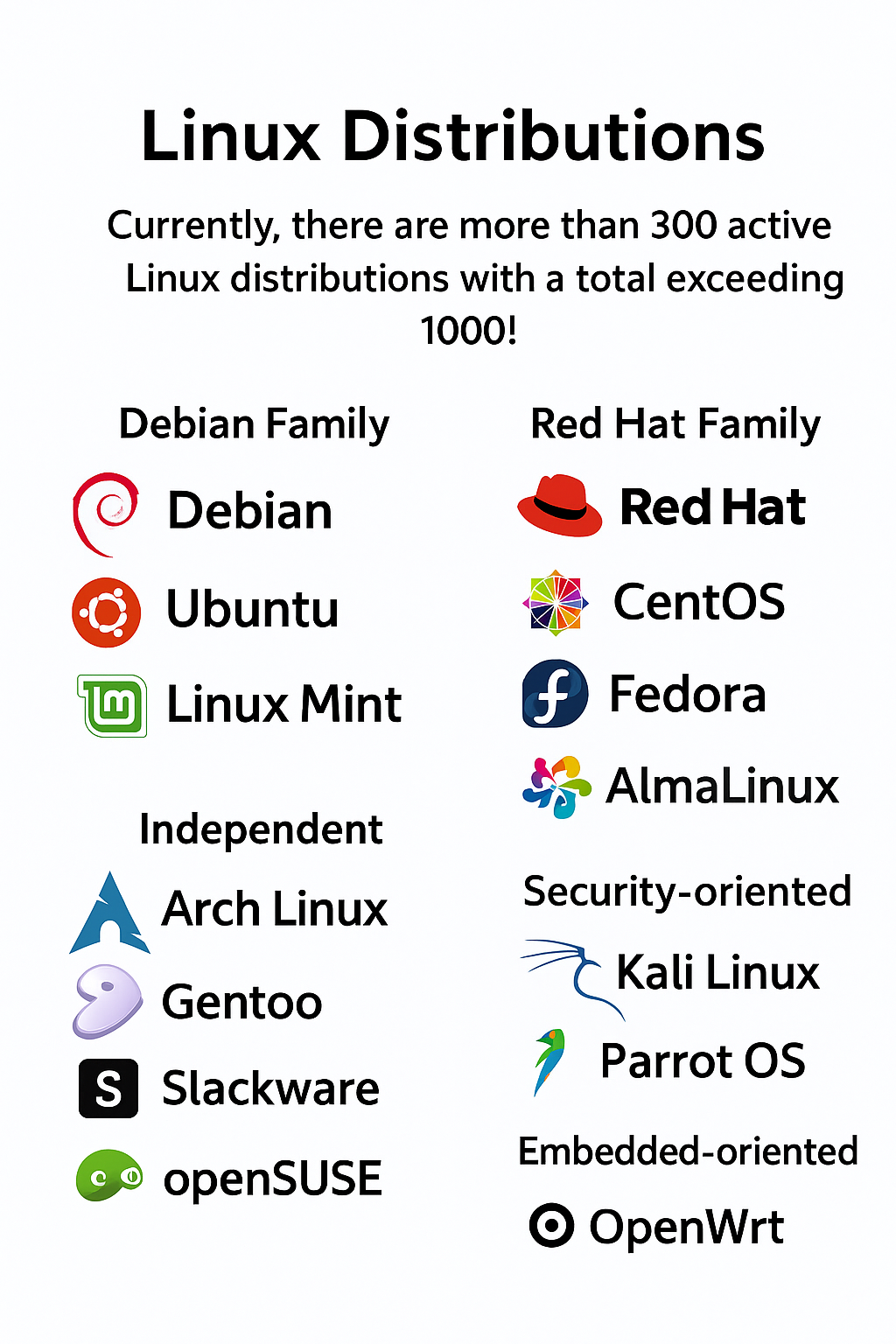
How to Choose a Linux Distribution?
- For General Users: 👉 Ubuntu / Linux Mint — Easy to install, comprehensive software, and active communities.
- For Server Administrators: 👉 CentOS Stream / Rocky Linux — Highly compatible with enterprise environments.
- For Tech Enthusiasts: 👉 Arch Linux / Gentoo — Highly customizable but requires time to learn.
- For Embedded/Industrial Scenarios: 👉 Yocto / OpenWrt / Chinese Kylin — Tailored for hardware customization and domestic substitution needs.
ARMxy’s Flexible Configuration

Similarly, the ARMxy series of industrial computers and edge computing gateways from Shenzhen Beilai Technology Co., Ltd. offers remarkable flexibility:
- Flexible chip options, including Rockchip, Allwinner, NXP, and TI platforms.
- Customizable memory and storage capacities based on project needs.
- Strong expandability with X and Y board IO modules.
- Support for mainstream distributions like Linux, Ubuntu, and Debian.
- Meets diverse needs in energy storage, rail transit, industrial control, and AI vision applications.
In Summary
Linux has one kernel but hundreds of distributions. This diversity is not chaos but freedom, enabling Linux to power servers, supercomputers, smartphones, routers, industrial machines, TVs, and even cars. Linux distributions are a rapidly growing part of this ecosystem. Much like Linux’s diverse ecosystem, the ARMxy series provides an open and versatile foundation for industrial intelligence upgrades.


