In the field of chip architecture, the comparison between RISC-V and ARM has evolved from a mere technical selection to a strategic debate over pathways. On one side is RISC-V: open-source, royalty-free, highly customizable, and free from control by a single vendor. On the other is ARM: mature, stable, with a complete ecosystem, dominating mainstream industrial and edge computing applications.
Although RISC-V appears more "advanced" on paper, why do the industry and engineering projects still overwhelmingly choose ARM? This article dissects the issue from the perspectives of architectural features, software ecosystem, engineering costs, and risks, incorporating the latest industry developments as of 2025.
Core Advantage of RISC-V: Open-Source and Independent Control
RISC-V is not proprietary technology owned by any company but an open-source Instruction Set Architecture (ISA) maintained by RISC-V International (a non-profit organization):
- No architecture licensing fees
- No vendor lock-in risk
- Supports custom extensions, enabling long-term independent evolution
From the perspective of "ownership" and geopolitical strategy, RISC-V indeed surpasses ARM, particularly in regions with strong demands for independent control (such as Chinese industrial projects). In 2025, the RISC-V market is growing rapidly, with expected shipments reaching tens of billions of cores, especially in embedded and coprocessor scenarios.
Fundamental Architectural Differences: Flexibility vs. Consistency
| Aspect |
ARM |
RISC-V |
| Governance |
Dominated by ARM Ltd., unified evolution pace |
Open-source modular (Base + Extensions), encourages custom additions |
| Consistency |
Highly stable instruction set and ABI |
Significant implementation variations, weaker portability |
| Strengths |
Favors universal software ecosystem and cross-generation compatibility |
Favors highly customized SoCs |
ARM's strong consistency ensures binary software compatibility, while RISC-V's modularity is better suited for specific optimizations. In industrial applications, consistency often takes priority over extreme flexibility.
Software Ecosystem: Maturity Determines Adoption Threshold
In industrial and edge computing, CPU performance is rarely the bottleneck—software ecosystem is the key.
- ARM Ecosystem (2025 Status):
- Linux/Ubuntu/Yocto/RTOS extremely mature
- Standardized BSPs, drivers, and toolchains
- Long-term validation for Docker, Node-RED, industrial protocol stacks (e.g., Modbus, OPC UA)
- Stable ABI supporting cross-generation application execution
- RISC-V Ecosystem (2025 Status):
- Mainline Linux support is robust, with significant progress in standardization efforts like RVA23 Profile
- However, vendor-specific BSPs vary greatly, with inconsistent driver quality and completeness
- Software package support is growing rapidly (official support in Ubuntu/Fedora distributions), but depth and breadth still lag behind ARM
In engineering practice, RISC-V's fragmentation leads to higher debugging and adaptation costs. In 2025, RISC-V has matured in embedded and AI accelerator ecosystems but remains behind ARM for general-purpose Linux edge controllers.
Engineering Cost Comparison: Licensing Fees vs. Hidden Costs
A common misconception: ARM has high licensing fees, while RISC-V is free. Actual cost structure:
| Item |
ARM |
RISC-V |
| Architecture Licensing |
One-time fee |
Zero licensing fee |
| Software Adaptation/Debugging |
Low (mature BSPs and toolchains) |
High (large vendor differences, more manpower/time) |
| Project Delay Risk |
Low |
High |
| Overall Engineering Cost |
Licensing fees far outweighed by avoided uncertainty losses |
Hidden costs often higher |
In industrial projects, delays and uncertainties are far more expensive than licensing fees. ARM offers lower risk in rapid mass production and long-term supply scenarios.
Why ARM Better Supports Industrial-Grade Long-Term Delivery
ARM's advantages lie not just in technical specs but in system-level capabilities:
- Stable ABI ensuring 5–10 years of software continuity
- Mature supply chain reducing discontinuation/replacement risks
- De facto industry standard lowering customer decision costs
Thus, in industrial gateways, edge controllers, and robot main controllers, ARM remains the "default choice." In 2025, even as RISC-V rapidly closes the performance gap, ARM still leads in mainstream industrial market share.
Suitable Positioning for RISC-V (2025 Perspective)
Based on engineering experience and industry trends, RISC-V is better suited for:
- MCUs, control cores, protocol processors, security cores, AI accelerators
- Highly customized SoCs
- Systems with rigid independent control requirements (e.g., specific Chinese projects)
Less suitable for:
- General-purpose Linux edge controllers
- Multi-protocol concurrent industrial gateways
- Standardized rapid mass-production devices
In 2025, RISC-V has high penetration in coprocessors and embedded areas (e.g., internal use by NVIDIA/Google), but main processors still need time to catch up.
Realistic Choices for Industrial Gateways/Edge Computing
If your system requires:
- Long-term Linux maintenance
- Complex runtimes like Docker/Node-RED
- Concurrent multi-industrial protocols
- Stable mass production and supply
As of 2025, ARM remains the lowest-risk option. RISC-V is more appropriately positioned as control plane/coprocessor or next-generation technology reserve.
Beilai Technology's ARMxy Series: Selection Logic
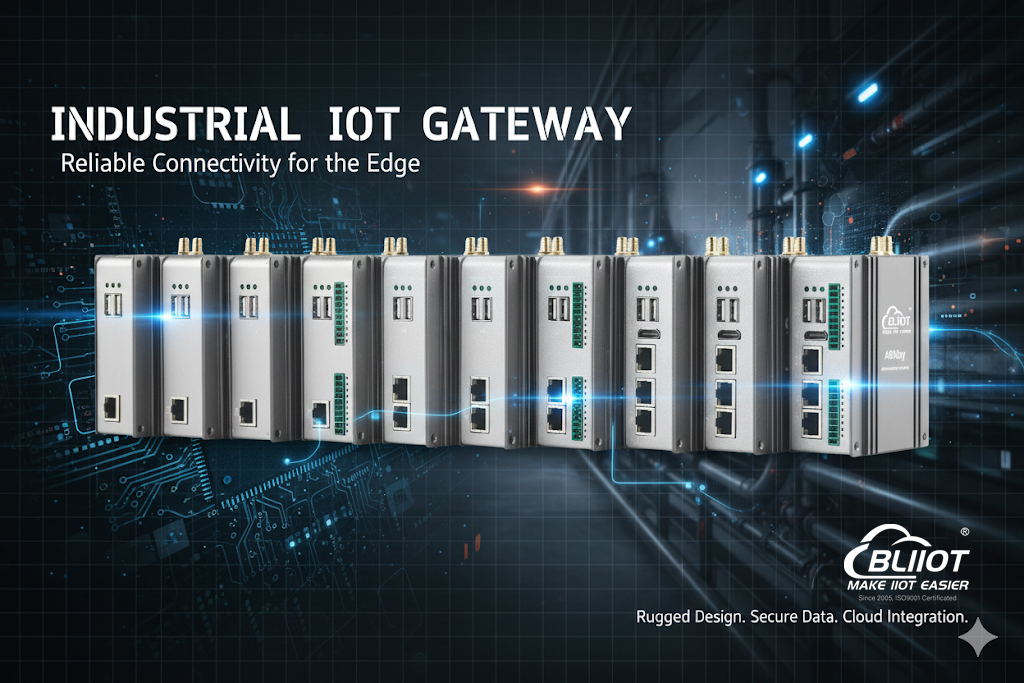
Beilai Technology focuses on industrial IoT and edge computing products. The core reasons for choosing ARM architecture in the ARM Industrial Gateway ARMxy series:
- Based on mature ARM SoCs with complete Linux ecosystem; mainline kernels/drivers are long-term maintainable
- Stable operation of complex environments like Docker, Node-RED, and industrial protocol stacks
- Strong ABI continuity, suitable for 5–10 year lifecycle industrial products
- Mature supply chain with low risk
At the same time, we perform deep engineering optimization on BSPs/drivers to ensure production-grade field stability. We continuously monitor RISC-V development, using it as an optional scheme for control/coprocessors and future reserves.
Using ARM to address current delivery needs while positioning RISC-V for future evolution—this is the pragmatic logic behind the ARMxy series' architecture choice. Looking ahead to 2030, as the RISC-V ecosystem further matures (e.g., full RVA23 adoption), industry choices will become more diversified.


