The Rise and Definition of Soft PLCs
Core Concept: A Soft PLC is a decoupled architecture that separates control logic software from hardware, enabling control programs to run on diverse platforms (e.g., industrial PCs, edge devices, servers). Key features include:
-
Integrated Functionality: Combines traditional PLC control, data logging, communication gateways, HMIs, and web servers.
-
Platform Evolution: Initially relied on Windows; now primarily uses real-time operating systems (RTOS) like Linux, FreeRTOS, or QNX.
Market Status:
-
Leading industrial automation vendors (e.g., WAGO FPC200 series, BECKHOFF CX9020 series, ABB AC500 series) have launched Soft PLC solutions.
-
Non-traditional PLC manufacturers enhance competitiveness via Soft PLC integration (e.g., CODESYS, OpenPLC platform).
Core Advantages of Soft PLCs
Disruptive Impact: The Innovator’s Dilemma
Historical Parallel:
Kodak’s bankruptcy resulted from delaying digital camera commercialization to protect its film business, allowing low-cost competitors to dominate.
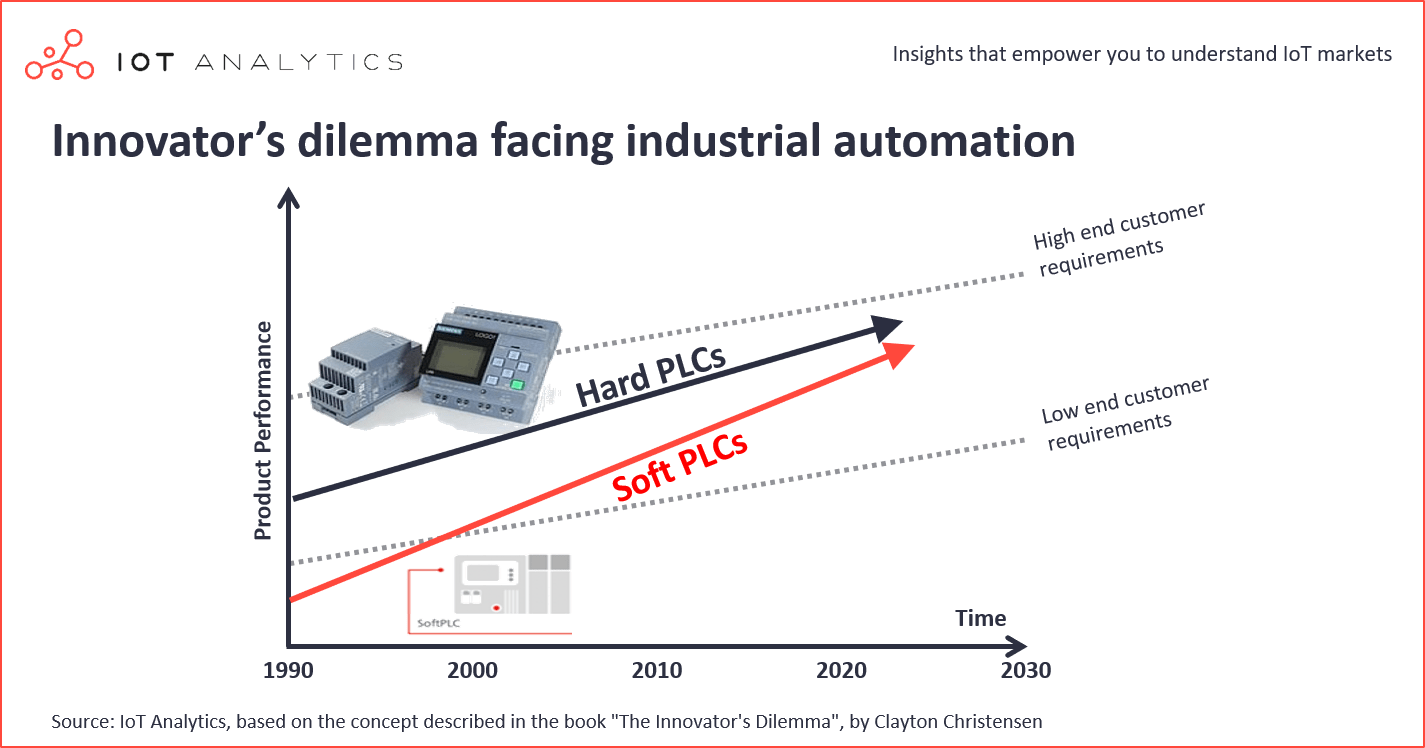 Replay in Industrial Control:
-
Traditional PLC Camp: Dominated by Siemens, Rockwell Automation, etc., serving high-reliability/real-time needs but with closed systems and high upgrade costs.
-
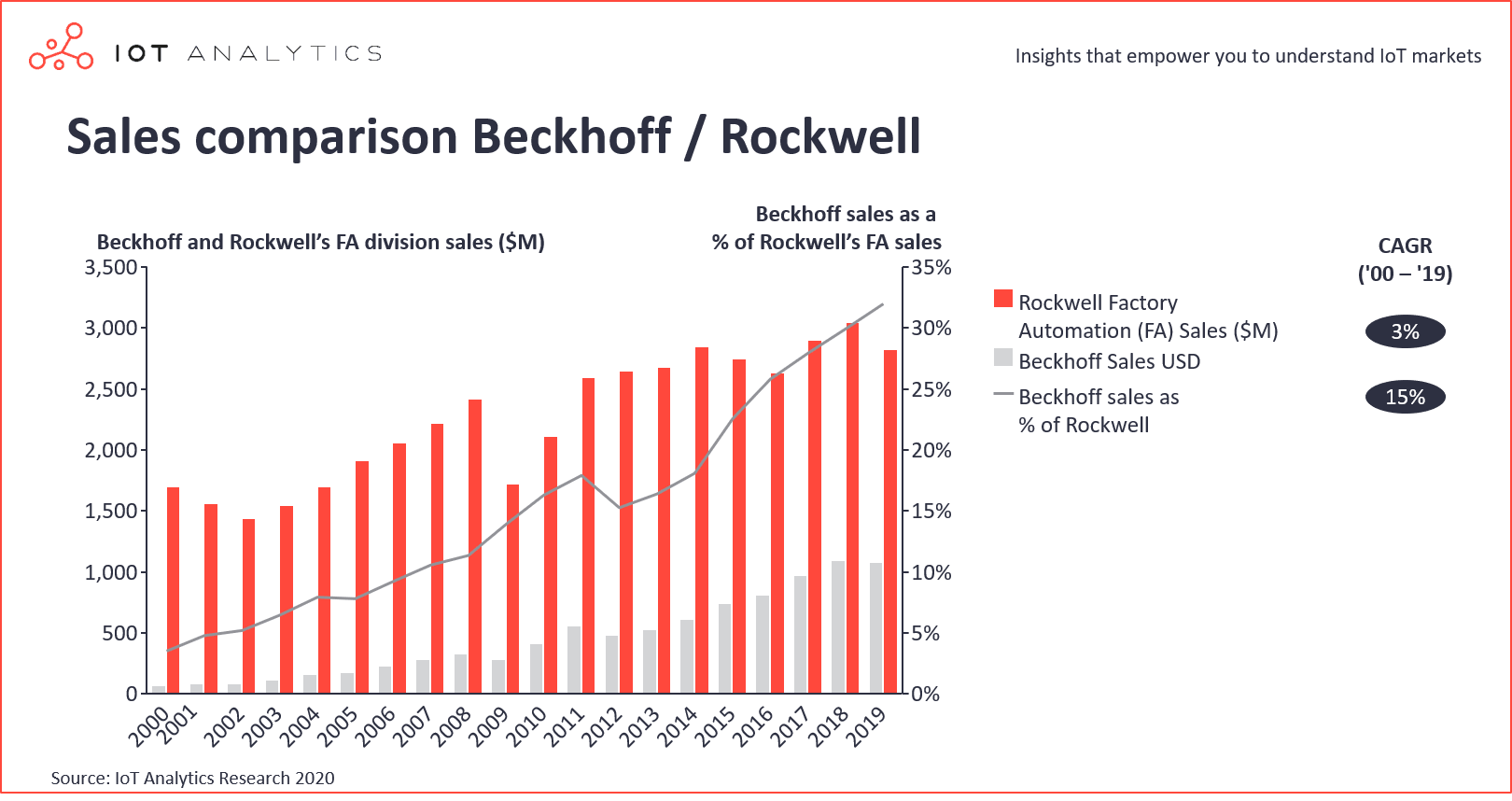
Soft PLC Camp: Led by disruptors like BECKHOFF, rapidly penetrating mid/low-end markets with flexibility and cost efficiency.
- Data Insight: BECKHOFF’s 2024 revenue reached €1.17 billion (~¥9 billion RMB) with per-employee productivity of ~¥2 million RMB (5,500 staff).
Safety Controversies and Breakthroughs
Misconception Origin: Early non-deterministic OS raised real-time/reliability concerns.
Current Status:
-
Hardware/OS Autonomy: Components selectable based on safety requirements.
-
Certification System: Mainstream solutions support IEC 61508 via functional simplification and compliant development.
-
Distributed Safety Architecture: E.g., BECKHOFF TwinSAFE enables end-to-end safety from I/O terminals to complex systems.
Future Trend: Gradual Displacement, Not Full Replacement
-
Market Segmentation
-
High-end scenarios (nuclear, high-speed production): Traditional PLCs remain dominant.
-
SMEs & IoT edge nodes: Soft PLCs accelerate adoption due to cost advantages.
-
Vendor Transformation: Rockwell, Siemens, etc., adopt "hard + soft" dual strategies.
-
Ecosystem Competition: CODESYS as de facto standard; developer ecosystems determine long-term viability.
Conclusion: Soft PLCs will reshape market share but not eliminate traditional PLCs. Their openness, cost efficiency, and rapid iteration solidify their role as Industry 4.0 enablers. Mastering platforms like CODESYS, OPenPLC is essential for engineers.
Appendix: Leading Soft PLC Solution Providers (Partial)
| Vendor |
Key Technology |
Product Line |
| BECKHOFF |
EtherCAT master integration |
TwinCAT 3 |
| CODESYS |
Cross-platform runtime environment |
3rd-party device kits |
| Schneider Electric |
Cloud-edge architecture |
EcoStruxure |
| Siemens |
Hardware-software integration |
SIMATIC IPC + S7 |
BL340+OpenPLC: The next generation of soft PLC integration solution
The BL340+OpenPLC combination will quickly replace traditional PLCs in small and medium-sized automation projects with its three major features: hardware modularization, software open source, and cloud-edge collaboration. It is recommended to prioritize cost-sensitive areas that require cloud integration, such as photovoltaic energy storage and smart buildings, while expanding high-end motion control capabilities through the Y series boards.
References:


