ARMxy BL370 Series: High-Performance ARM-Based Industrial Computer, It is ideal for industrial automation, machine vision, edge computing, energy management, smart manufacturing and AIoT solutions.
ARMxy BL370 Series: High-Performance ARM-Based Industrial Computer
The ARMxy BL370 series is a high-performance, highly reliable ARM-based industrial computer, designed around the Rockchip RK3562/RK3562J processor. It features a quad-core Cortex-A53 + single-core Cortex-M0 architecture with a clock speed of up to 1.8GHz/2.0GHz, along with an integrated 1TOPS NPU for deep learning inference. This series offers flexible hardware configurations, including 8GB~32GB eMMC storage, 1GB~4GB LPDDR4X memory, and a wide range of I/O interfaces (such as RS485, CAN, RS232, DI/DO, AI/AO, etc.), meeting diverse industrial control requirements.
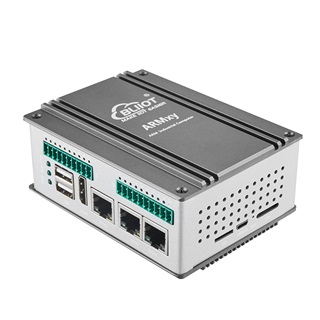
The BL370 series supports multiple operating systems (Linux-RT, Ubuntu, Debian, Android) and development tools (Qt, Docker, Node-Red). It comes pre-installed with BLIoTLink protocol conversion software and BLRAT remote maintenance tools, enabling rapid integration with industrial IoT platforms. Its industrial-grade design (operating temperature: -40°C~85°C, IP30 protection, EMI resistance) ensures stable operation in harsh environments. It is ideal for applications such as industrial automation, machine vision, edge computing, energy management, and rail transportation, making it a perfect choice for smart manufacturing and AIoT solutions.

Thanks to its high performance, rich interface options, and robust environmental adaptability, the ARMxy BL370 series is suitable for a wide range of industrial and intelligent applications. Below are its key application areas:
1. Industrial Control
-
Applications: Automated production line control, PLC replacement, equipment monitoring.
-
Advantages: Supports multiple industrial protocols (Modbus, CAN, RS485, etc.), offers high reliability and real-time performance (Linux-RT kernel), and operates reliably in harsh industrial environments (-40°C~85°C).
2. Edge Computing & AIoT
-
Applications: Edge data collection, real-time analysis, AI inference (e.g., defect detection, predictive maintenance).
-
Advantages: Built-in 1TOPS NPU, supports TensorFlow/PyTorch frameworks for deep learning model deployment; compatible with Docker and Node-Red for rapid IoT development.
3. Machine Vision & Smart Manufacturing
-
Applications: Visual inspection (e.g., product quality sorting), AGV navigation, robotic control.
-
Advantages: Supports 4K video decoding, 1080P encoding, works with OpenCV and ISP processing; provides high-speed GPIO and PWM output (Y95/Y96 modules).
4. Energy Management (EMS/BMS for Energy Storage Systems)
-
Applications: Battery status monitoring, energy scheduling, photovoltaic inverter control.
-
Advantages: Supports analog input (AI modules like Y31/Y36), RTD temperature sensing (PT100/PT1000), and wide-range power input (9-36VDC).
5. Rail Transportation & Intelligent Traffic Systems
-
Applications: On-board control systems, signal equipment management, smart station platforms.
-
Advantages: Passes EMC tests (GB/T standards), resists vibration and shock, and adapts to mobile scenarios.
6. Communication Gateway
-
Applications: Industrial gateways, protocol conversion (Modbus to MQTT), data aggregation.
-
Advantages: Features 1~3 RJ45 Ethernet ports, supports 4G/5G/WiFi, and comes with BLIoTLink software for quick cloud platform integration.
7. Smart Devices & Robotics
-
Applications: Service robots, collaborative robotic arms, motion control.
-
Advantages: Provides pulse counting (Y95/Y96), multi-axis control interfaces, and supports real-time OS (Linux-RT).
8. Environmental Monitoring & IoT Gateways
-
Applications: Temperature/humidity sensing, pollution monitoring, remote maintenance.
-
Advantages: Supports thermocouples (Y58), IEPE sensors (Y37), and includes BLRAT tool for remote access.
9. Customized Solutions
-
Flexibility: Configurable with X/Y series I/O boards (relays, analog modules) and SOM boards (varying storage/temperature grades) to meet specialized needs in medical equipment, agricultural automation, and more.
Conclusion
The BL370 series is designed for applications requiring high-performance computing, multi-protocol support, and extreme environmental adaptability. It is particularly well-suited for Industry 4.0, smart energy, and intelligent transportation systems, with its modular design further expanding its application potential.


