The BL310 Compact Industrial ARM Embedded Controller, is an ARM Industrial Mini Pc, based on the NXP i.MX 6ULL SoC. With its low power consumption, high performance, and rich interfaces, it is well-suited for wind turbine monitoring systems.
The BL310 Compact Industrial ARM Embedded Controller, is an ARM Industrial Mini Pc, based on the NXP i.MX 6ULL SoC. With its low power consumption, high performance, and rich interfaces, it is well-suited for wind turbine monitoring systems. Below are its specific applications and advantages in wind turbine monitoring:
1. Hardware Configuration and Performance
-
Processor: NXP i.MX 6ULL, single-core Cortex-A7, up to 800 MHz.
-
Low Power Design: Ideal for long-running monitoring devices, reducing energy consumption.
-
Memory: Supports DDR3L, with optional capacities (typically 256MB/512MB).
-
Storage: Supports eMMC and MicroSD card expansion for data storage needs.
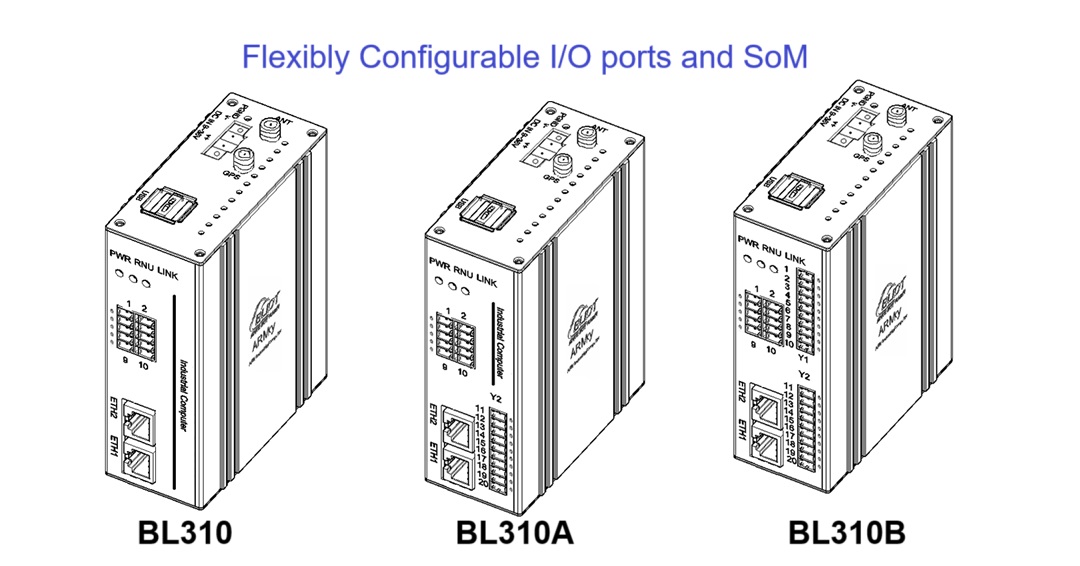
2. Rich Interface Support
3. High Reliability and Stability
-
Industrial-Grade Design:
-
Wide operating temperature range (-40°C to +85°C), suitable for harsh environments where wind turbines operate.
-
Vibration and shock resistance, ensuring stable operation under strong winds and high altitudes.
-
Long Lifecycle Support:
4. Support for Multiple Operating Systems
-
Operating Systems:
-
Development Environment:
5. Applications in Wind Turbine Monitoring
-
Data Acquisition and Transmission:
-
Real-time collection of wind turbine operational data (e.g., wind speed, rotation speed, temperature, vibration).
-
Transmits data to monitoring centers via Ethernet or wireless networks.
-
Fault Diagnosis and Early Warning:
-
Analyzes sensor data to monitor equipment status and provide early fault warnings.
-
Supports remote diagnosis and maintenance, reducing downtime.
-
Environmental Monitoring:
-
Energy Management:
-
Edge Computing:
6. Summary of Advantages
-
Low Power Design: Suitable for long-running wind turbine monitoring needs.
-
Rich Interfaces: Supports multiple sensors and communication protocols, meeting diverse monitoring requirements.
-
High Reliability: Industrial-grade design ensures stable operation in harsh environments.
-
Flexible OS Support: Compatible with Linux and real-time operating systems, providing a flexible software development environment.
-
Cost-Effectiveness: Ideal for large-scale deployment, reducing monitoring system costs.
Conclusion
The BL310 Compact ARM Embedded Controller, equipped with the NXP i.MX 6ULL SoC, is an ideal choice for wind turbine monitoring systems due to its low power consumption, rich interfaces, and high reliability. Whether for data acquisition, fault diagnosis, environmental monitoring, or energy management, the BL310 Embedded Linux Controller provides efficient and stable support, enabling intelligent monitoring and management of wind power systems.


