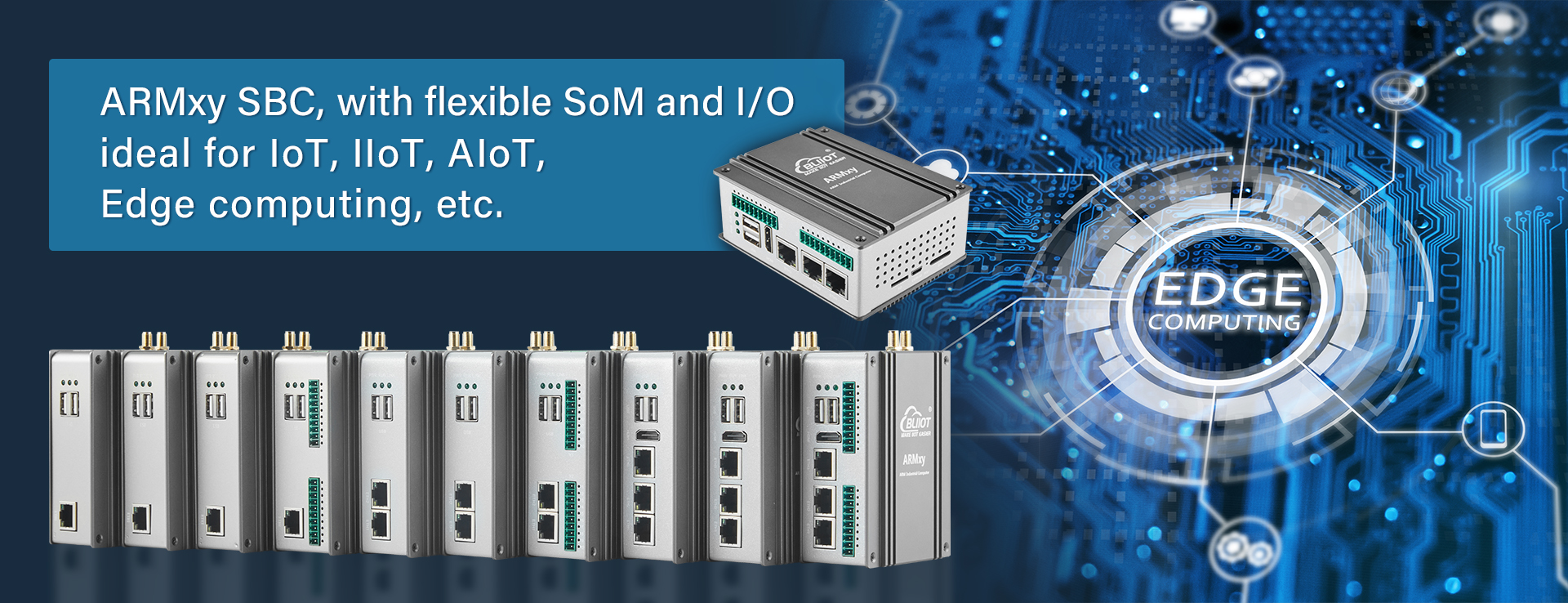
Industrial processors are not defined by performance, but by real-time capability, ecosystem, and long-term reliability.
In recent years, engineers working on industrial control systems, industrial gateways, or edge computing devices have noticed an interesting phenomenon.
On one side, Chinese SoC vendors such as Rockchip are rapidly improving performance. For example, the Rockchip RK3588 offers extremely powerful CPU and AI capabilities.
On the other side, many industrial equipment manufacturers still prefer processors from Texas Instruments (TI) and NXP Semiconductors.
Even many PLCs, industrial gateways, and motion control systems continue using processors that appear relatively weak compared with modern high-performance SoCs.
This leads to a common question among engineers:
If domestic SoCs provide much higher performance, why are they not widely used in industrial systems?
The answer is simple:
In industrial applications, competition is not about raw performance — it is about the entire industrial ecosystem.
Below is a practical comparison of Rockchip, TI, and NXP in industrial applications.
Performance: Rockchip Actually Leads
From a pure computing perspective, modern SoCs such as Rockchip RK3588 are extremely powerful.
RK3588 specifications include:
In contrast, many traditional industrial processors include:
| Processor |
CPU |
| TI AM335x |
Cortex-A8 |
| TI AM62x |
Cortex-A53 |
| NXP i.MX8 |
Cortex-A53 |
In terms of raw computing power, RK3588 significantly outperforms many traditional industrial processors.
However, CPU performance is rarely the primary selection criterion for industrial equipment.
Industrial systems prioritize:
Real-Time Control Capability
Industrial control systems require deterministic real-time behavior.
In many industrial scenarios:
However, Linux scheduling latency is typically milliseconds.
To solve this, many industrial SoCs integrate real-time cores:
| Processor |
Real-Time Core |
| RK3588 |
Cortex-M0 |
| TI AM62x |
Cortex-M4F |
| NXP i.MX8 |
Cortex-M4 |
For example, the TI AM62x includes the well-known PRU (Programmable Real-time Unit), capable of:
This is critical for:
-
EtherCAT
-
PLC control
-
Motion control systems
Industrial Protocol Ecosystem
The real barrier in industrial computing is the industrial communication ecosystem.
Common industrial protocols include:
-
EtherCAT
-
PROFINET
-
CANopen
-
TSN
These protocols are governed by international organizations such as:
TI and NXP are not only semiconductor vendors but also active members of these ecosystems.
This provides several advantages:
In contrast, many general-purpose SoC vendors mainly provide hardware platforms and Linux BSPs, while industrial protocol implementation often requires additional development.
Software Ecosystem
In real industrial projects, software ecosystem maturity is often more important than raw hardware performance.
SDK maturity comparison:
| Vendor |
SDK Maturity |
| TI |
⭐⭐⭐⭐⭐ |
| NXP |
⭐⭐⭐⭐ |
| Rockchip |
⭐⭐ |
TI SDKs often include:
Many general-purpose SoC SDKs mainly provide:
Industrial software stacks often require third-party solutions or in-house development.
Product Lifecycle
Industrial equipment typically requires extremely long lifecycles.
Many systems remain in production for 10–15 years.
Typical processor lifecycle comparison:
| Vendor |
Lifecycle |
| TI |
~15 years |
| NXP |
10–15 years |
| Rockchip |
5–8 years |
For example, the TI AM335x has been on the market for over 13 years and is still widely shipped.
This long-term availability is critical for industrial customers.
Certification
Industrial and automotive applications often require strict certifications such as:
Many TI and NXP processors are designed with these certifications in mind.
Consumer-focused SoCs typically do not target these certification requirements.
Supply Chain Stability
The global semiconductor shortage in 2021 revealed another critical factor:
supply chain stability.
Industrial semiconductor vendors such as TI and NXP offer:
-
Long-term supply commitments
-
Industrial customer prioritization
-
In some cases, their own wafer fabrication facilities
This greatly improves reliability for long-term industrial deployments.
Rockchip’s Strengths
Despite ecosystem differences, Rockchip processors have several strong advantages:
Therefore, many modern industrial systems are adopting a hybrid architecture:
Industrial Control CPU
+
AI Edge Computing SoC
For example:
PLC (TI or NXP)
+
AI controller (RK3588)
Industrial Architecture Is Changing
Traditional industrial systems were structured as:
PLC
→ Field Devices
Modern industrial systems are evolving toward:
Industrial Control
In this architecture, high-performance processors such as RK3588 become increasingly important for applications such as:
-
Machine vision
-
AI inspection
-
Data analytics
-
Predictive maintenance
Conclusion
A common question is:
Which is better: Rockchip, TI, or NXP?
The real answer is that each has different strengths:
| Company |
Core Strength |
| TI |
Industrial control |
| NXP |
Automotive and industrial MCU |
| Rockchip |
Edge AI and high-performance SoCs |
The future of industrial systems is likely to combine:
Industrial control systems + AI edge computing platforms
Industrial architecture is evolving — and this marks the beginning of the next phase of industrial intelligence.