ARM Industrial Controllers is central nodes for data processing and communication in building heating systems, driving the transition toward intelligent and energy-efficient solutions.
Case Details
Building heating systems are critical for ensuring indoor comfort and energy efficiency. With the rise of building automation and smart cities, traditional heating control methods struggle to meet demands for energy conservation, remote operation, and intelligent scheduling. ARM industrial controllers, with their low power consumption, high performance, versatile interfaces, and robust protocol support, serve as an ideal core platform for building heating monitoring and control.
System Components
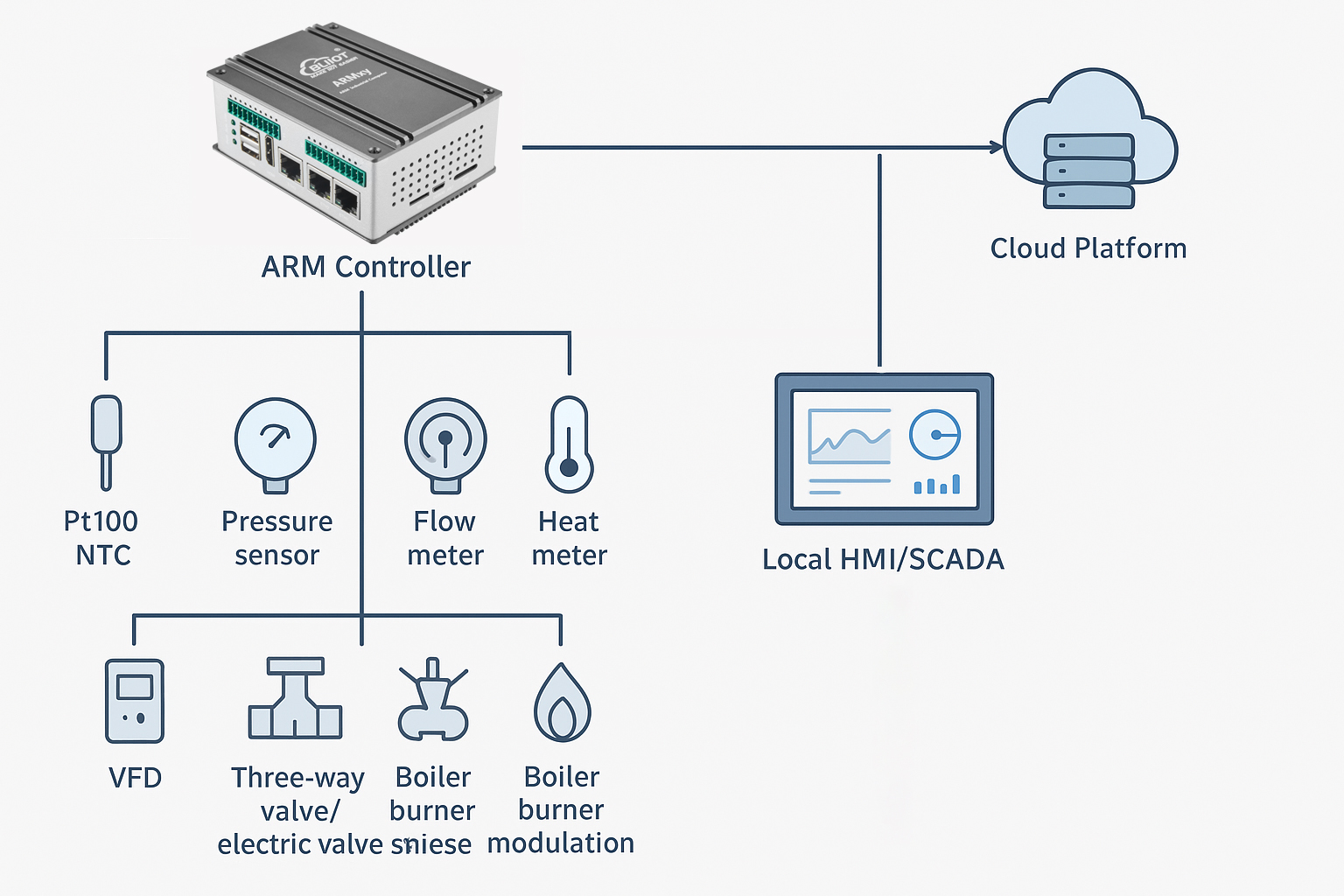
A typical ARM-based building heating monitoring and control system consists of the following components:
Core Control Device
-
ARM Industrial Controller BL370 : Flexible optional I/O modules (DIN/DO/Relay/AIN/AO/RTD/TC etc.), RS485/Ethernet interfaces, Support 4G, WIFI, Bluetooth communication methods and VPN remote access support.
- Enables on-site data acquisition, PID control, logic operations, protocol conversion, and edge computing.
Sensor Layer
-
Temperature Sensors: Pt100, NTC for monitoring supply/return water and indoor temperatures.
-
Pressure/Differential Pressure Sensors: Monitor pipeline pressure and differential pressure to ensure hydraulic balance.
-
Flow Meters and Heat Meters: Track flow and heat consumption for energy analysis.
-
Outdoor Temperature Sensors: Enable outdoor climate compensation to optimize heating strategies.
-
Indoor Temperature and Humidity Sensors: Provide data for comfort monitoring.
Actuator Layer
-
VFD (Variable Frequency Drive): Adjusts circulation pump speed for demand-based water supply, reducing energy consumption.
-
Three-Way Valves/Electric Valves: Control hot water flow and temperature for zone-specific regulation.
-
Burner Proportional Module: Precisely adjusts boiler combustion power to enhance thermal efficiency.
Software and Platform
-
Edge Control Application: Supports PID control, logic operations, and data modeling.
-
Local HMI/SCADA: Provides a visualization interface for on-site monitoring and alarm management.
-
Cloud Platform: Generates energy consumption reports, stores operational data, and supports remote maintenance and predictive analytics.
Power Distribution and Safety
-
Power System: Isolated power design ensures stable supply.
-
Protection Measures: Fuses and surge protection prevent sudden electrical damage.
-
Grounding and Wiring: Proper grounding, weak current wiring, and shielding reduce interference.
Working Principle
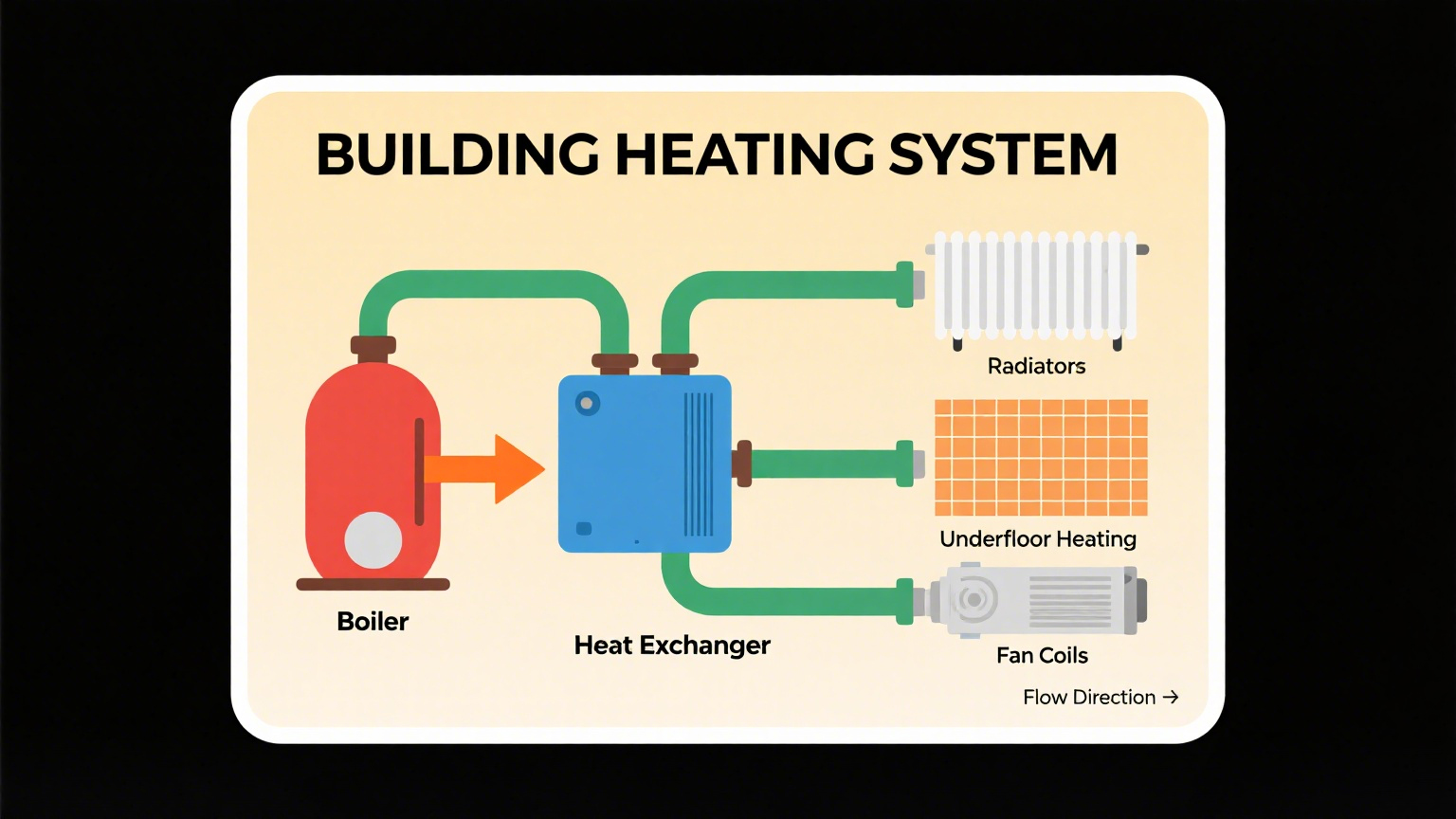
The ARM controller collects real-time data on supply/return water temperature, pressure, and flow, combined with outdoor climate information, to calculate optimal supply temperature and flow rate. Through PID control strategies, it automatically adjusts pump speed and valve opening to maintain stable indoor temperatures. The controller also proportionally regulates the burner of boilers or heat exchange units to achieve demand-driven heating, minimizing energy waste.
The system supports remote monitoring and maintenance:
-
Operators can access SCADA or the cloud platform via VPN to view operational parameters and alarm information.
-
The cloud analyzes historical data, generates energy consumption reports, and optimizes control based on weather forecasts.
-
Data models and alert mechanisms enable early detection of equipment failure trends, facilitating predictive maintenance.
Application Value
-
Energy Efficiency: Outdoor temperature compensation, variable flow regulation, and burner proportional control achieve 15–30% energy savings.
-
Enhanced Comfort: Reduced indoor temperature fluctuations improve occupant satisfaction.
-
Intelligent Management: Enables centralized building management and multi-building scheduling.
-
Safety and Reliability: Power and safety protection designs ensure stable system operation.
-
Operational Efficiency: Remote maintenance, fault prediction, and energy analysis significantly reduce manual maintenance costs.
Conclusion
ARM Industrial Controllers serve as both real-time control units and central nodes for data processing and communication in building heating systems, driving the transition toward intelligent and energy-efficient solutions. In the future, integrating AI predictive algorithms and IoT platforms, ARM controllers will further enhance energy efficiency and operational capabilities, providing a robust technical foundation for smart building development.


