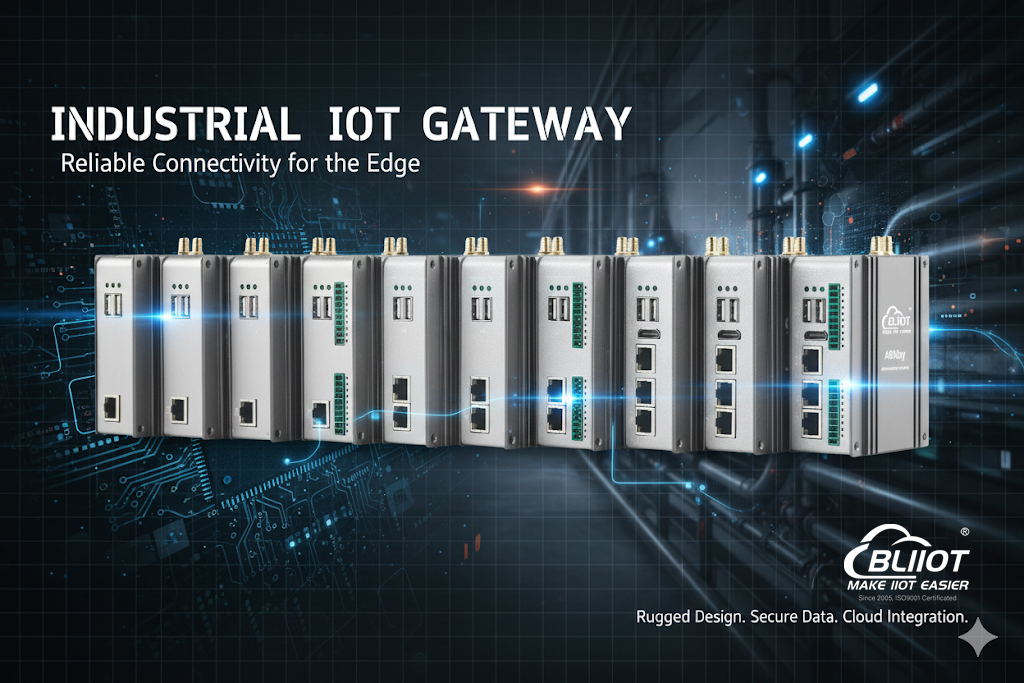
The integration of ARM embedded gateways transforms LNG storage tank monitoring for liquid level, temperature, and pressure into a more intelligent, reliable, and networked system.
Case Details
As global energy structures transition toward sustainability, liquefied natural gas (LNG) plays an increasingly vital role in clean energy supply chains. LNG storage tanks, as core facilities in the storage and transportation process, are essential for ensuring the safety and efficiency of the entire industry. Liquid level, temperature, and pressure represent the three critical parameters for LNG tank monitoring. ARM embedded gateways, with their low power consumption, high performance, and abundant industrial interfaces, have emerged as the ideal core devices for intelligent monitoring and remote management of LNG tanks.
Monitoring Requirements and Challenges
LNG storage tanks operate in ultra-low-temperature environments (approximately -162°C), necessitating continuous monitoring of liquid level variations, internal temperature distributions, and top pressure to guarantee operational safety and compliance with national and international standards. Traditional monitoring systems often rely on single-point data acquisition and manual inspections, which lack real-time capabilities and intelligent alerting. Achieving reliable online monitoring and remote maintenance in hazardous environments remains a key challenge in the digital transformation of the LNG sector.
ARM embedded gateways serve as the "bridge" between storage tanks and upper-level monitoring systems, offering the following core functionalities:
- Multi-Source Data Acquisition: Supports integration with various sensors, including radar level gauges, guided wave radar, multi-point RTD temperature probes, distributed fiber optic temperature sensors, and pressure transmitters.
- Industrial Communication Interfaces: Integrates RS-485, CAN, Ethernet, and 4–20 mA analog interfaces, compatible with mainstream protocols such as Modbus RTU/TCP, MQTT, and OPC UA.
- Edge Computing Capabilities: Performs local data filtering, trend analysis, and anomaly detection—such as sudden liquid level changes, localized temperature spikes, or excessive pressure—enhancing real-time responsiveness.
- Security and Redundancy: Features TLS-encrypted communications, VPN access, device authentication, and configurable local caching with breakpoint resumption to prevent data loss.
- Remote Maintenance: Enables secure OTA (over-the-air) upgrades and remote parameter configuration, reducing on-site intervention needs.
These capabilities align with industrial IoT trends, where ARM-based gateways like the ARMxy series are deployed for energy storage and automation control, providing flexible, rugged solutions for harsh environments.
System Topology and Data Flow
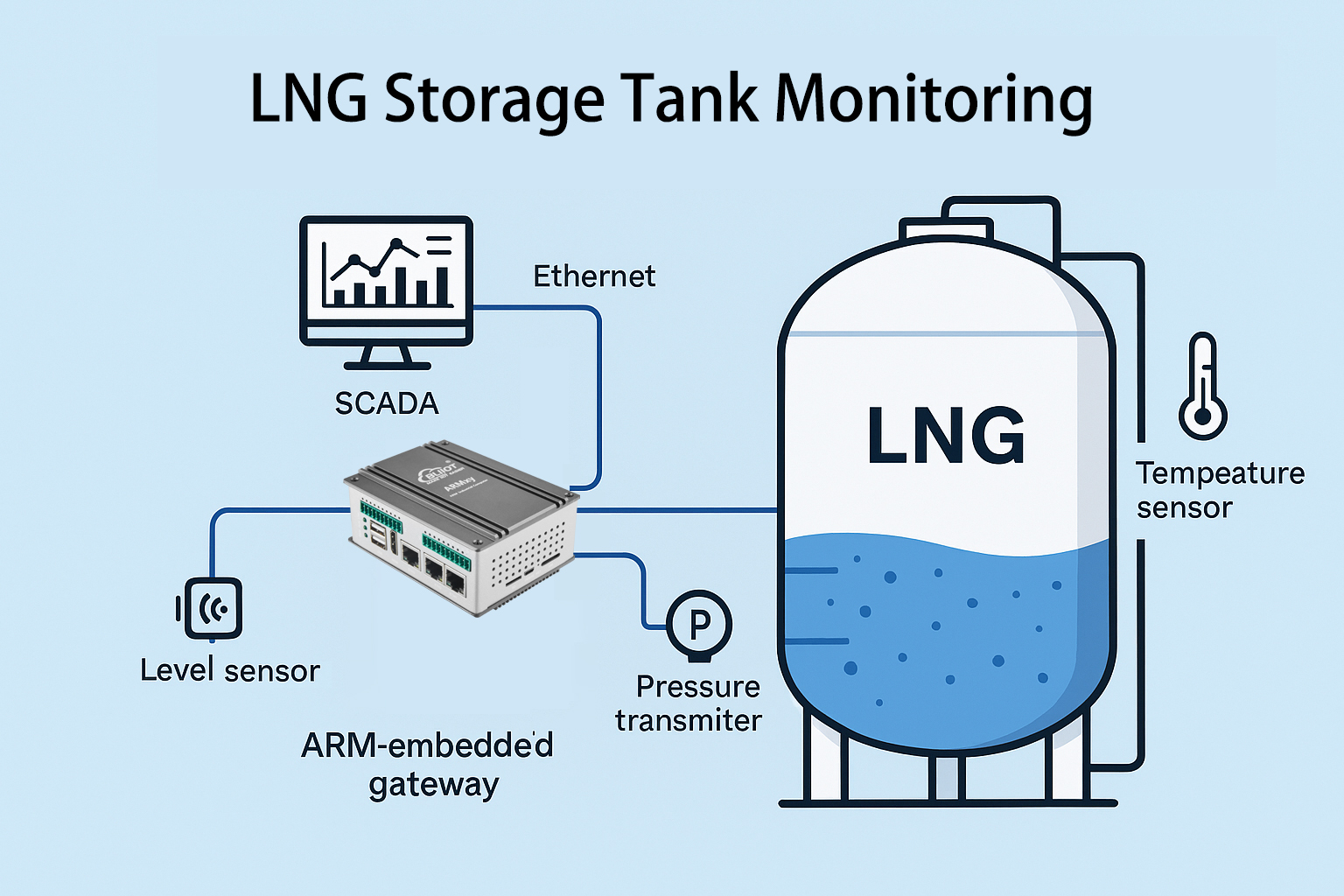
In a typical LNG storage tank monitoring setup, signals from level gauges, temperature probes, and pressure transmitters are routed to the ARM embedded gateway. At the edge, the gateway handles data sampling, alarm logic, and status evaluation. Data is then securely transmitted via Ethernet or LTE/5G wireless links to SCADA systems or cloud platforms for real-time oversight, historical trend analysis, and alert management. In cases of liquid level or pressure exceedances, the gateway can activate local relays to trigger audible-visual alarms or interlock emergency shutdown devices.
This architecture supports advanced tank gauging solutions, incorporating cool-down monitoring, leak detection, and stratification prevention, as seen in established LNG systems.
Application Value
- Enhanced Safety: Real-time surveillance of liquid level, temperature, and pressure, coupled with automated anomaly responses, minimizes risks of leaks and explosions.
- Intelligent Decision Support: Leverages edge computing and big data analytics to deliver predictive maintenance insights and energy efficiency optimizations for LNG storage and transport.
- Reduced Operational Costs: Remote diagnostics and maintenance lower manual inspection frequencies, boosting overall efficiency.
- Compliance Assurance: Meets explosion-proof standards like ATEX/IECEx and API/EN norms, ensuring LNG systems adhere to global regulations.
Conclusion
The integration of ARM embedded gateways transforms LNG storage tank monitoring for liquid level, temperature, and pressure into a more intelligent, reliable, and networked system. Looking ahead, as edge AI and 5G technologies advance, these gateways will take on expanded roles in proactive monitoring and control within the LNG industry, driving the digital evolution of the energy sector.