ARM Linux-based edge gateways provide reliable technical support for centralized multi-building management with their efficient data processing and multi-protocol compatibility.
Case Details
In the realm of smart cities and modern building operations, traditional management approaches often lead to isolated systems and inefficient maintenance. With the rise of IoT and smart technologies, building owners and property managers are increasingly focused on centralized multi-building management to achieve unified monitoring, energy optimization, and enhanced security. ARM Linux-based edge gateways BL340 Series, with their high-performance processing, rich interfaces, and multi-protocol support, are the ideal solution for this application.
System Architecture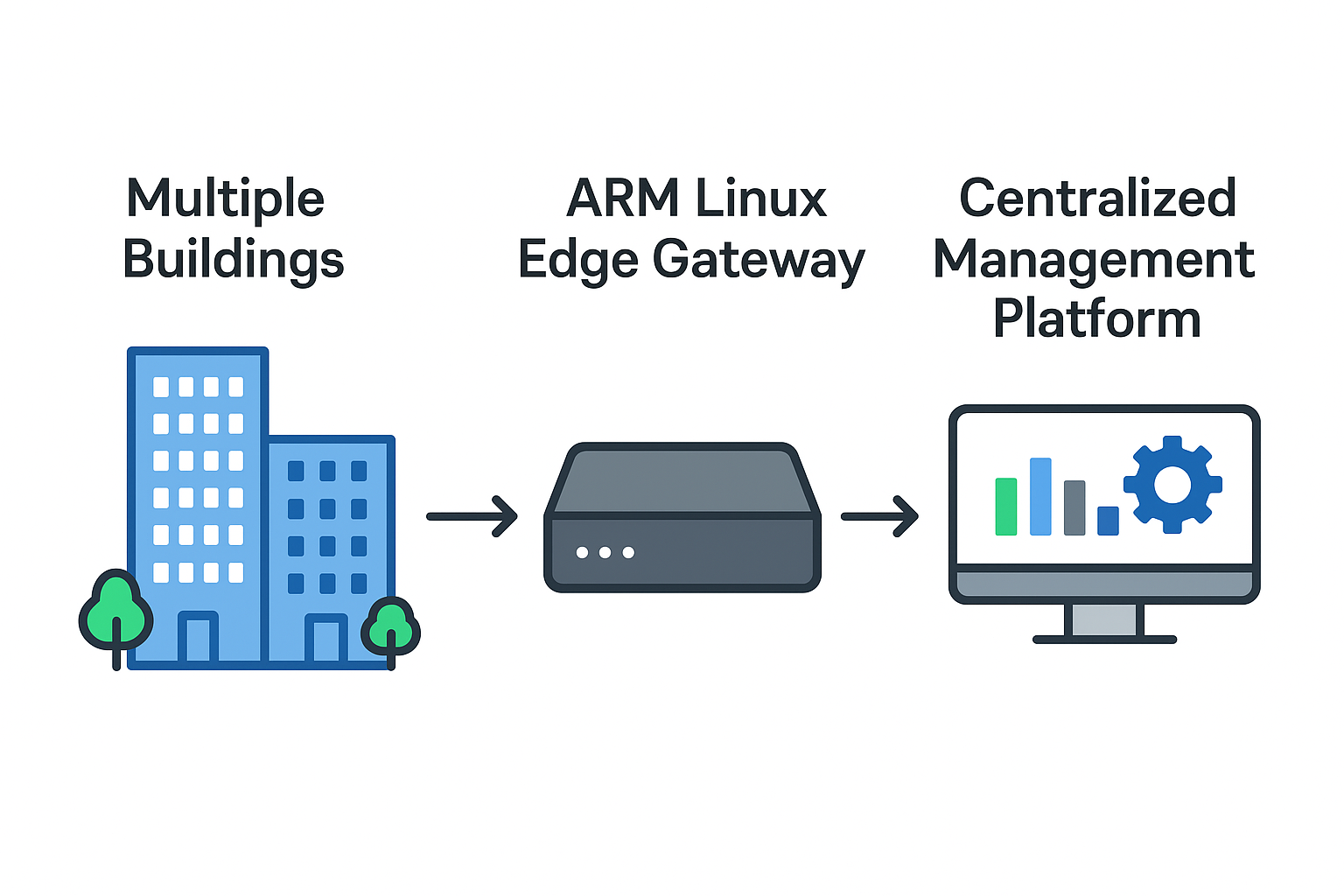
In a centralized multi-building management architecture, the ARM Linux edge gateway is deployed in each sub-building, acting as a data aggregation and processing hub. Its primary functions include:
Key Advantages
-
Centralized Operations & Management: Unified monitoring across multiple buildings improves management efficiency and reduces labor costs.
-
Energy Efficiency: Analyzing energy consumption across multiple buildings allows for the optimization of equipment operation strategies to achieve energy-saving goals.
-
Enhanced Security: Cross-building security linkage accelerates response times to emergencies.
-
Strong Compatibility: Support for multiple protocols like Modbus, BACnet, and MQTT ensures seamless integration with systems from various manufacturers.
-
Excellent Scalability: Easily integrates with AI algorithms and big data platforms for advanced predictive maintenance and intelligent scheduling.
Application Scenarios
-
Large Campuses: Centralized management and energy monitoring for multiple office buildings.
-
Healthcare Systems: Unified security and energy scheduling across a hospital group's multiple campuses.
-
Educational Institutions: A centralized building management platform for a university's various campuses.
-
Hotel and Real Estate Groups: Unified monitoring and maintenance for hotels and properties across different regions.
Conclusion
ARM Linux-based edge gateways provide reliable technical support for centralized multi-building management with their efficient data processing and multi-protocol compatibility. They not only break down information silos and enable inter-building connectivity, but also help management reduce operational costs, improve energy efficiency, and enhance security. As smart cities and intelligent buildings continue to evolve, ARM Linux edge gateways will play an increasingly vital role in centralized multi-building management.


